
Concurrency Hazards
Introduction: Concurrency Hazards
Section titled “Introduction: Concurrency Hazards”Concurrent programming introduces several hazards that can cause systems to fail, perform poorly, or behave unpredictably. Understanding and preventing these hazards is crucial.
Visual: Common Hazards
Section titled “Visual: Common Hazards”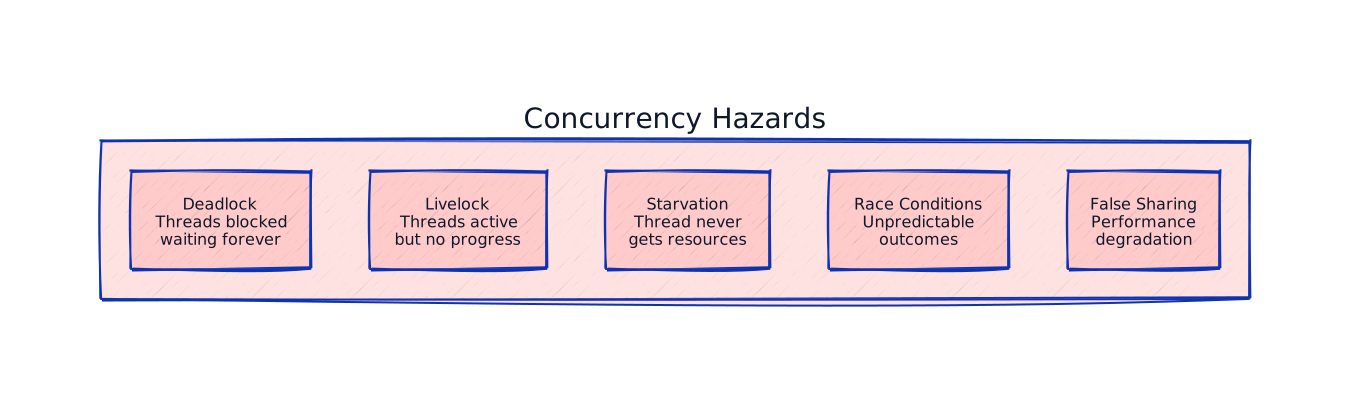
Deadlocks
Section titled “Deadlocks”A deadlock occurs when two or more threads are blocked forever, waiting for each other.
Coffman Conditions (All Must Be Present)
Section titled “Coffman Conditions (All Must Be Present)”- Mutual Exclusion: Resources cannot be shared
- Hold and Wait: Threads hold resources while waiting for others
- No Preemption: Resources cannot be forcibly taken
- Circular Wait: Circular chain of waiting threads
Visual: Deadlock Scenario
Section titled “Visual: Deadlock Scenario”
Example: Deadlock Code
Section titled “Example: Deadlock Code”public class DeadlockExample { private static final Object lock1 = new Object(); private static final Object lock2 = new Object();
public static void main(String[] args) { Thread thread1 = new Thread(() -> { synchronized (lock1) { System.out.println("Thread 1: Holding lock1"); try { Thread.sleep(100); } catch (InterruptedException e) { Thread.currentThread().interrupt(); } synchronized (lock2) { // Waiting for lock2 System.out.println("Thread 1: Holding lock1 and lock2"); } } });
Thread thread2 = new Thread(() -> { synchronized (lock2) { // Different order! System.out.println("Thread 2: Holding lock2"); try { Thread.sleep(100); } catch (InterruptedException e) { Thread.currentThread().interrupt(); } synchronized (lock1) { // Waiting for lock1 System.out.println("Thread 2: Holding lock1 and lock2"); } } });
thread1.start(); thread2.start(); // Both threads will deadlock! }}import threadingimport time
lock1 = threading.Lock()lock2 = threading.Lock()
def thread1(): with lock1: print("Thread 1: Holding lock1") time.sleep(0.1) with lock2: # Waiting for lock2 print("Thread 1: Holding lock1 and lock2")
def thread2(): with lock2: # Different order! print("Thread 2: Holding lock2") time.sleep(0.1) with lock1: # Waiting for lock1 print("Thread 2: Holding lock1 and lock2")
threading.Thread(target=thread1).start()threading.Thread(target=thread2).start()# Both threads will deadlock!package main
import "fmt"
func main() { ch1 := make(chan struct{}) ch2 := make(chan struct{})
// Goroutine 1: send on ch1, then wait on ch2 go func() { fmt.Println("Goroutine 1: sending on ch1") ch1 <- struct{}{} // blocks until goroutine 2 receives fmt.Println("Goroutine 1: waiting on ch2") <-ch2 }()
// Goroutine 2: send on ch2, then wait on ch1 — circular wait! go func() { fmt.Println("Goroutine 2: sending on ch2") ch2 <- struct{}{} // blocks until goroutine 1 receives fmt.Println("Goroutine 2: waiting on ch1") <-ch1 }()
// Both goroutines will deadlock — Go runtime detects and panics select {}}Prevention: Lock Ordering
Section titled “Prevention: Lock Ordering”Solution: Always acquire locks in the same order everywhere!
public class DeadlockPrevention { private static final Object lock1 = new Object(); private static final Object lock2 = new Object();
// Helper method to ensure consistent ordering private static void acquireLocks(Object first, Object second) { Object lockA = first.hashCode() < second.hashCode() ? first : second; Object lockB = first.hashCode() < second.hashCode() ? second : first;
synchronized (lockA) { synchronized (lockB) { // Critical section } } }
public static void method1() { acquireLocks(lock1, lock2); // Always same order! }
public static void method2() { acquireLocks(lock2, lock1); // Same order enforced! }}import threading
lock1 = threading.Lock()lock2 = threading.Lock()
def acquire_locks(first, second): """Ensure consistent lock ordering""" locks = sorted([first, second], key=id) # Order by object ID with locks[0]: with locks[1]: # Critical section pass
def method1(): acquire_locks(lock1, lock2) # Always same order!
def method2(): acquire_locks(lock2, lock1) # Same order enforced!package main
import ( "fmt" "sync")
var ( mu1 sync.Mutex mu2 sync.Mutex)
// acquireLocks always locks mu1 before mu2 — consistent orderingfunc acquireLocks(first, second *sync.Mutex) { first.Lock() defer first.Unlock() second.Lock() defer second.Unlock() // critical section}
func method1() { acquireLocks(&mu1, &mu2) // mu1 → mu2}
func method2() { acquireLocks(&mu1, &mu2) // same order enforced!}
func main() { var wg sync.WaitGroup wg.Add(2) go func() { defer wg.Done(); method1(); fmt.Println("method1 done") }() go func() { defer wg.Done(); method2(); fmt.Println("method2 done") }() wg.Wait()}Prevention: Timeout-Based Locking
Section titled “Prevention: Timeout-Based Locking”import java.util.concurrent.locks.ReentrantLock;import java.util.concurrent.TimeUnit;
public class TimeoutLocking { private static ReentrantLock lock1 = new ReentrantLock(); private static ReentrantLock lock2 = new ReentrantLock();
public static boolean tryAcquireLocks() { boolean acquired1 = false; boolean acquired2 = false;
try { acquired1 = lock1.tryLock(100, TimeUnit.MILLISECONDS); if (!acquired1) return false;
acquired2 = lock2.tryLock(100, TimeUnit.MILLISECONDS); if (!acquired2) { lock1.unlock(); // Release first lock return false; }
// Both locks acquired return true; } catch (InterruptedException e) { if (acquired1) lock1.unlock(); if (acquired2) lock2.unlock(); Thread.currentThread().interrupt(); return false; } }}package main
import ( "fmt" "sync" "time")
var ( mu1 sync.Mutex mu2 sync.Mutex)
func tryAcquireLocks(timeout time.Duration) bool { acquired1 := make(chan struct{}, 1) go func() { mu1.Lock() acquired1 <- struct{}{} }()
select { case <-acquired1: // got mu1, now try mu2 case <-time.After(timeout): return false // timed out waiting for mu1 }
acquired2 := make(chan struct{}, 1) go func() { mu2.Lock() acquired2 <- struct{}{} }()
select { case <-acquired2: // got both locks — critical section here mu2.Unlock() mu1.Unlock() return true case <-time.After(timeout): mu1.Unlock() // release first lock before giving up return false }}
func main() { ok := tryAcquireLocks(100 * time.Millisecond) fmt.Println("Locks acquired:", ok)}Livelock
Section titled “Livelock”Livelock occurs when threads are actively working but making no progress due to repeated state changes.
Visual: Livelock
Section titled “Visual: Livelock”
Example: Livelock (Polite Algorithm)
Section titled “Example: Livelock (Polite Algorithm)”public class LivelockExample { static class Person { boolean isMoving = false; String name;
Person(String name) { this.name = name; }
synchronized void moveAside(Person other) { while (other.isMoving) { System.out.println(name + ": Waiting for " + other.name); try { Thread.sleep(100); } catch (InterruptedException e) { Thread.currentThread().interrupt(); } } isMoving = true; System.out.println(name + ": Moving aside"); isMoving = false; } }
public static void main(String[] args) { Person alice = new Person("Alice"); Person bob = new Person("Bob");
new Thread(() -> { while (true) { alice.moveAside(bob); // Alice moves for Bob } }).start();
new Thread(() -> { while (true) { bob.moveAside(alice); // Bob moves for Alice } }).start();
// Both threads keep moving but never progress! }}package main
import ( "fmt" "runtime" "sync/atomic")
var ( aliceMoving int32 bobMoving int32)
func moveAside(myFlag, otherFlag *int32, name, otherName string) { for atomic.LoadInt32(otherFlag) == 1 { fmt.Printf("%s: waiting for %s\n", name, otherName) runtime.Gosched() // yield CPU — but both keep yielding forever } atomic.StoreInt32(myFlag, 1) fmt.Printf("%s: moving aside\n", name) atomic.StoreInt32(myFlag, 0)}
func main() { done := make(chan struct{})
go func() { for { select { case <-done: return default: moveAside(&aliceMoving, &bobMoving, "Alice", "Bob") } } }()
go func() { for { select { case <-done: return default: moveAside(&bobMoving, &aliceMoving, "Bob", "Alice") } } }()
// Both goroutines keep moving but never make real progress! // (Press Ctrl+C to stop in a real run) select {}}Solution: Randomization
Section titled “Solution: Randomization”import java.util.Random;
public class LivelockSolution { private static Random random = new Random();
synchronized void moveAside(Person other) { // Add randomization to break livelock if (random.nextBoolean()) { try { Thread.sleep(random.nextInt(100)); // Random delay } catch (InterruptedException e) { Thread.currentThread().interrupt(); } } // Proceed with movement }}package main
import ( "fmt" "math/rand" "runtime" "sync/atomic" "time")
var ( aliceMoving int32 bobMoving int32)
func moveAsideRandom(myFlag, otherFlag *int32, name, otherName string) { for atomic.LoadInt32(otherFlag) == 1 { // Add randomization to break livelock if rand.Intn(2) == 0 { delay := time.Duration(rand.Intn(100)) * time.Millisecond time.Sleep(delay) // random back-off } else { runtime.Gosched() // just yield } fmt.Printf("%s: backing off, waiting for %s\n", name, otherName) } atomic.StoreInt32(myFlag, 1) fmt.Printf("%s: moving aside\n", name) atomic.StoreInt32(myFlag, 0)}
func main() { go moveAsideRandom(&aliceMoving, &bobMoving, "Alice", "Bob") go moveAsideRandom(&bobMoving, &aliceMoving, "Bob", "Alice")
time.Sleep(500 * time.Millisecond) fmt.Println("Done — randomization broke the livelock")}Starvation
Section titled “Starvation”Starvation occurs when a thread is unable to gain regular access to shared resources.
Visual: Starvation
Section titled “Visual: Starvation”
Prevention: Fair Locks
Section titled “Prevention: Fair Locks”import java.util.concurrent.locks.ReentrantLock;
public class FairLockExample { // Fair lock ensures FIFO ordering private static ReentrantLock fairLock = new ReentrantLock(true);
public static void accessResource() { fairLock.lock(); try { // Critical section } finally { fairLock.unlock(); } }}package main
import ( "fmt" "sync" "time")
// Go's sync.Mutex does NOT guarantee FIFO ordering — it is not a "fair" lock.// For fairness, use a channel-based ticket queue.
type FairMutex struct { queue chan struct{}}
func NewFairMutex() *FairMutex { // Buffered channel acts as a FIFO queue return &FairMutex{queue: make(chan struct{}, 1)}}
func (m *FairMutex) Lock() { m.queue <- struct{}{} // enqueue — blocks if another goroutine holds it}
func (m *FairMutex) Unlock() { <-m.queue // dequeue — next waiter unblocks in order}
func accessResource(id int, mu *FairMutex, wg *sync.WaitGroup) { defer wg.Done() mu.Lock() defer mu.Unlock() fmt.Printf("Goroutine %d: in critical section\n", id) time.Sleep(10 * time.Millisecond)}
func main() { mu := NewFairMutex() var wg sync.WaitGroup
for i := 1; i <= 5; i++ { wg.Add(1) go accessResource(i, mu, &wg) }
wg.Wait() fmt.Println("All goroutines completed — FIFO ordering ensured")}False Sharing
Section titled “False Sharing”False sharing occurs when multiple threads modify different variables on the same CPU cache line.
Visual: False Sharing
Section titled “Visual: False Sharing”
Example: False Sharing and Solution
Section titled “Example: False Sharing and Solution”// ❌ False sharingclass Counter { volatile long count1; // Same cache line volatile long count2; // Same cache line}
// ✅ Solution: Paddingclass PaddedCounter { volatile long count1; long p1, p2, p3, p4, p5, p6, p7; // Padding (56 bytes) volatile long count2; long p8, p9, p10, p11, p12, p13, p14; // More padding}
// Or use @Contended (Java 8+)class ContendedCounter { @sun.misc.Contended volatile long count1;
@sun.misc.Contended volatile long count2;}package main
import ( "fmt" "sync" "sync/atomic")
// ❌ False sharing: count1 and count2 share the same 64-byte cache linetype Counter struct { count1 int64 count2 int64}
// ✅ Solution: pad each counter to its own cache line (64 bytes each)type PaddedCounter struct { count1 int64 _pad1 [56]byte // padding to fill 64-byte cache line count2 int64 _pad2 [56]byte}
func benchmarkFalseSharing() { c := &Counter{} var wg sync.WaitGroup
wg.Add(2) go func() { defer wg.Done() for i := 0; i < 1_000_000; i++ { atomic.AddInt64(&c.count1, 1) // modifies same cache line as count2 } }() go func() { defer wg.Done() for i := 0; i < 1_000_000; i++ { atomic.AddInt64(&c.count2, 1) // cache invalidation from goroutine 1 } }() wg.Wait() fmt.Printf("count1=%d count2=%d\n", c.count1, c.count2)}
func benchmarkPadded() { c := &PaddedCounter{} var wg sync.WaitGroup
wg.Add(2) go func() { defer wg.Done() for i := 0; i < 1_000_000; i++ { atomic.AddInt64(&c.count1, 1) // own cache line — no false sharing } }() go func() { defer wg.Done() for i := 0; i < 1_000_000; i++ { atomic.AddInt64(&c.count2, 1) } }() wg.Wait() fmt.Printf("count1=%d count2=%d\n", c.count1, c.count2)}
func main() { fmt.Print("False sharing: ") benchmarkFalseSharing() fmt.Print("Padded: ") benchmarkPadded()}Interview Questions
Section titled “Interview Questions”Q1: “What are the four conditions for deadlock?”
Section titled “Q1: “What are the four conditions for deadlock?””Answer: Coffman conditions (all must be present):
- Mutual Exclusion: Resources cannot be shared
- Hold and Wait: Threads hold resources while waiting
- No Preemption: Resources cannot be forcibly taken
- Circular Wait: Circular chain of waiting threads
Q2: “How would you prevent deadlocks?”
Section titled “Q2: “How would you prevent deadlocks?””Answer:
- Lock ordering: Always acquire locks in consistent order
- Timeout-based locking: Use
tryLock()with timeout - Avoid nested locks: Minimize lock nesting
- Lock-free alternatives: Use atomic operations when possible
Q3: “What’s the difference between deadlock and livelock?”
Section titled “Q3: “What’s the difference between deadlock and livelock?””Answer:
- Deadlock: Threads are blocked waiting (frozen)
- Livelock: Threads are active but making no progress (busy but stuck)
- Both: Prevent progress, but livelock uses CPU resources
Q4: “What is false sharing and how do you prevent it?”
Section titled “Q4: “What is false sharing and how do you prevent it?””Answer:
- False sharing: Multiple threads modify different variables on same cache line
- Impact: Unnecessary cache invalidation, performance degradation
- Prevention: Add padding, use
@Contendedannotation, align data structures
Key Takeaways
Section titled “Key Takeaways”Summary
Section titled “Summary”Mastering concurrency hazards is essential for building robust concurrent systems. Always:
- Design carefully to prevent hazards
- Use proper synchronization primitives
- Test thoroughly under concurrent conditions
- Monitor for hazards in production
Congratulations on completing the Advanced Concurrency module! 🎉
You’ve learned:
- Threads vs Processes
- Synchronization Primitives
- Producer-Consumer Pattern
- Thread Pools & Executors
- Concurrent Collections
- Asynchronous Patterns
- Lock-Free Programming
- Concurrency Hazards
You’re now well-prepared for LLD interviews involving concurrency! 🚀