
CAP Theorem Deep Dive
The CAP Theorem: The Unavoidable Trade-off
Section titled “The CAP Theorem: The Unavoidable Trade-off”The CAP theorem is one of the most fundamental concepts in distributed systems. It states a simple but profound truth:
In a distributed system, you can only guarantee two out of three:
- Consistency
- Availability
- Partition tolerance
Understanding the Three Properties
Section titled “Understanding the Three Properties”Before diving into the trade-offs, let’s understand what each property means:
C: Consistency
Section titled “C: Consistency”Consistency means all nodes see the same data at the same time. After a write completes, all reads (from any node) return the same value.
Key Point: Consistency requires coordination between nodes. All nodes must agree before a write is considered complete.
A: Availability
Section titled “A: Availability”Availability means the system responds to every request, even if some nodes are down or unreachable.

Key Point: Availability means no single point of failure. Even if some nodes fail, others can handle requests.
P: Partition Tolerance
Section titled “P: Partition Tolerance”Partition tolerance means the system continues operating even when network communication between nodes fails.
Key Point: Network partitions are inevitable in distributed systems. The question is: how does your system handle them?
The Impossible Choice: What Happens During a Partition?
Section titled “The Impossible Choice: What Happens During a Partition?”When a network partition occurs, you face an impossible choice:
This is the heart of CAP: During a partition, you must choose between Consistency and Availability. You cannot have both.
The Three Possible Combinations
Section titled “The Three Possible Combinations”CA: Consistency + Availability (Not Distributed)
Section titled “CA: Consistency + Availability (Not Distributed)”CA systems guarantee consistency and availability, but only work in non-distributed environments (single node).

Examples: Single-node databases, in-memory caches on one server.
Why CA Doesn’t Work Distributed: As soon as you have multiple nodes, network partitions become possible. When a partition occurs, you must choose CP or AP.
CP: Consistency + Partition Tolerance
Section titled “CP: Consistency + Partition Tolerance”CP systems prioritize consistency and partition tolerance. During partitions, they reject requests rather than serve potentially inconsistent data.
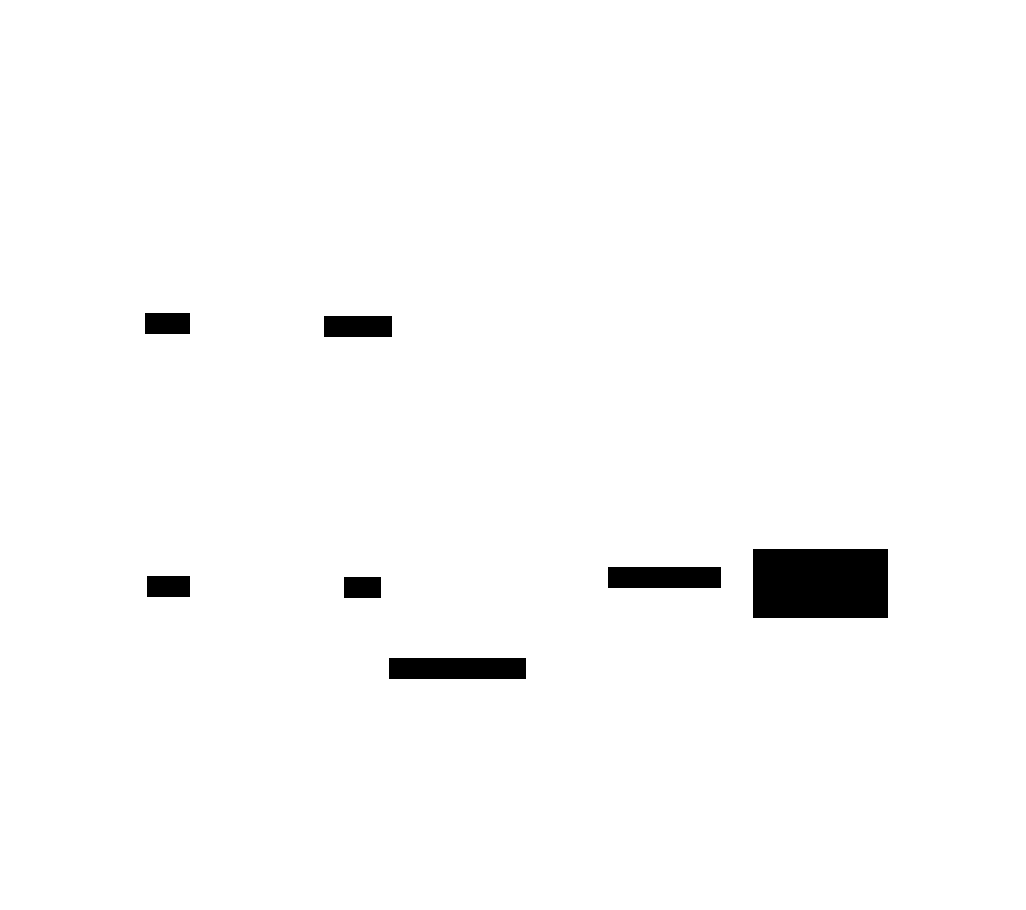
Characteristics:
- Strong consistency guaranteed
- Handles partitions gracefully
- Sacrifices availability during partitions
- Writes may fail if quorum not available
Examples: Traditional relational databases (PostgreSQL, MySQL), MongoDB (with strong consistency), HBase.
Use Cases: Financial systems, inventory management, critical state where accuracy > availability.
AP: Availability + Partition Tolerance
Section titled “AP: Availability + Partition Tolerance”AP systems prioritize availability and partition tolerance. During partitions, they continue serving requests even if data might be stale or inconsistent.
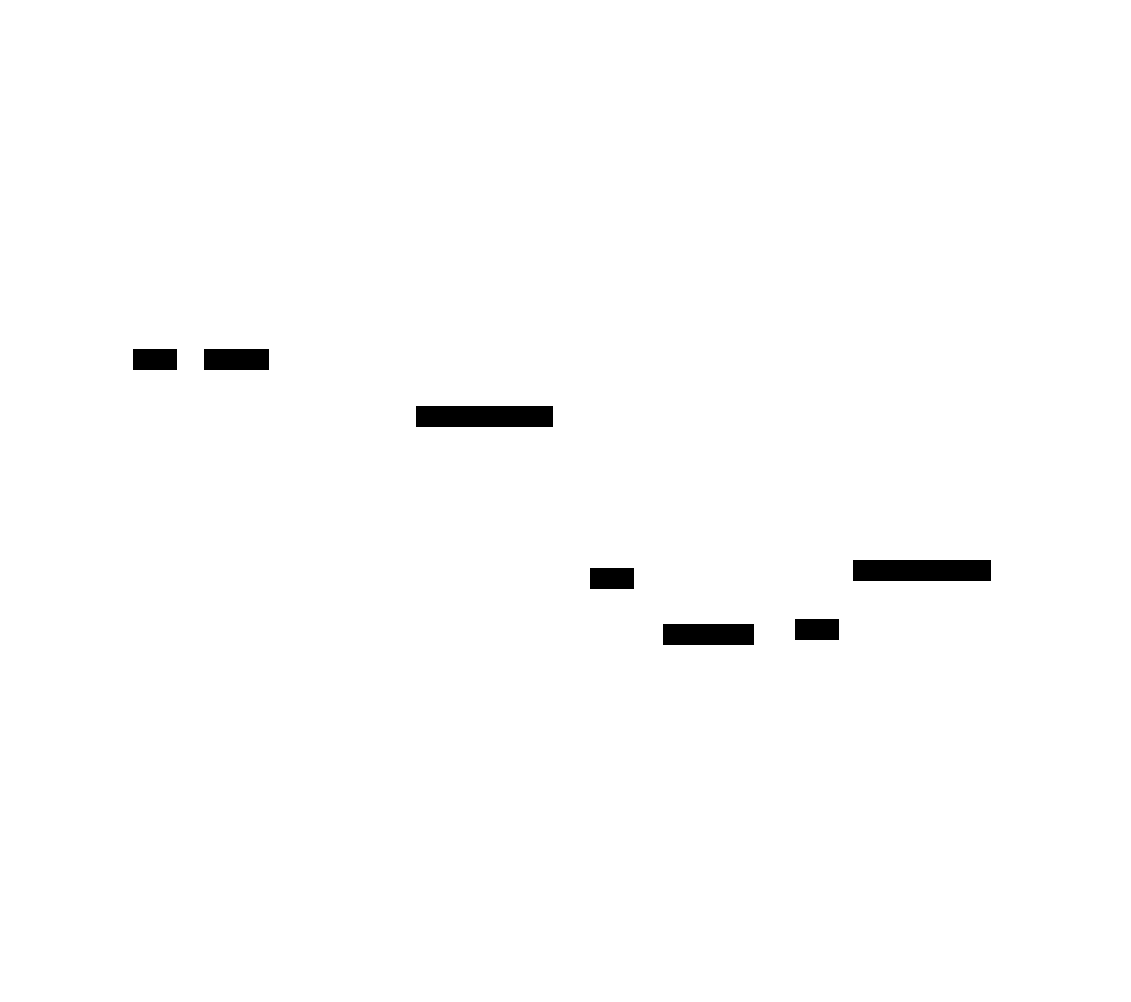
Characteristics:
- Always available (responds to requests)
- Handles partitions gracefully
- Sacrifices consistency during partitions
- May serve stale data temporarily
Examples: DNS, DynamoDB, Cassandra, CouchDB, most NoSQL databases.
Use Cases: Social media, content delivery, systems where availability > perfect consistency.
Real-World Examples
Section titled “Real-World Examples”Example 1: Bank Account (CP System)
Section titled “Example 1: Bank Account (CP System)”
Why CP? Incorrect balances are worse than temporary unavailability. Better to reject the transaction than create inconsistency.
Example 2: Social Media Feed (AP System)
Section titled “Example 2: Social Media Feed (AP System)”
Why AP? Users prefer seeing slightly outdated content over seeing nothing. Availability trumps perfect consistency.
CAP in Practice: It’s Not Binary
Section titled “CAP in Practice: It’s Not Binary”Tuning CAP Choices
Section titled “Tuning CAP Choices”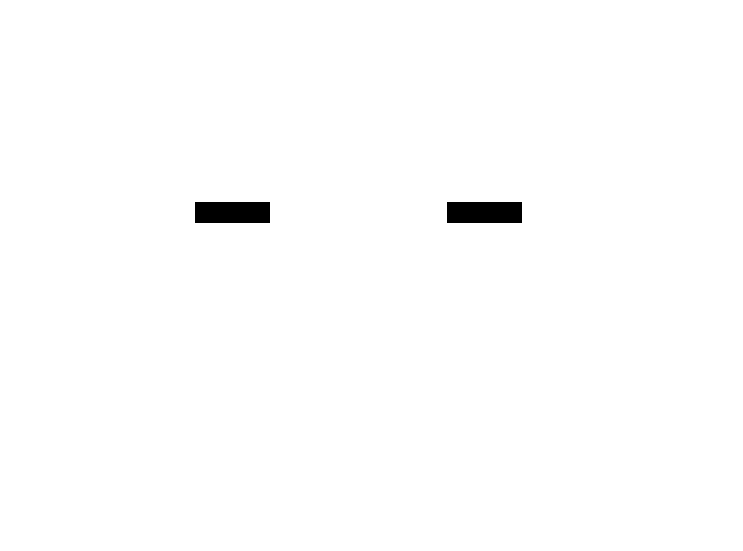
Example: Many systems use AP for reads (fast, available) and CP for writes (consistent, accurate).
LLD ↔ HLD Connection
Section titled “LLD ↔ HLD Connection”How CAP choices affect your class design:
CP Systems → Use Synchronization
Section titled “CP Systems → Use Synchronization”CP systems need coordination to maintain consistency:
from threading import Lockfrom typing import Optional
class CPDataStore: def __init__(self): self._data = {} self._lock = Lock() # Ensures consistency self._quorum_size = 2 # Need majority for writes
def write(self, key, value, replicas: list) -> bool: with self._lock: # Check if we have quorum if len(replicas) < self._quorum_size: return False # Reject if can't guarantee consistency
# Write to all replicas synchronously for replica in replicas: replica.set(key, value)
self._data[key] = value return Trueimport java.util.*;import java.util.concurrent.locks.ReentrantLock;
public class CPDataStore { private Map<String, Object> data = new HashMap<>(); private final ReentrantLock lock = new ReentrantLock(); private final int quorumSize = 2; // Need majority for writes
public boolean write(String key, Object value, List<Replica> replicas) { lock.lock(); try { // Check if we have quorum if (replicas.size() < quorumSize) { return false; // Reject if can't guarantee consistency }
// Write to all replicas synchronously for (Replica replica : replicas) { replica.set(key, value); }
data.put(key, value); return true; } finally { lock.unlock(); } }}class Replica { async set(key: string, value: any): Promise<void> { // Replica write implementation }}
class CPDataStore { private data: Map<string, any> = new Map(); private lock: Promise<void> = Promise.resolve(); private quorumSize: number = 2; // Need majority for writes
async write(key: string, value: any, replicas: Replica[]): Promise<boolean> { // Acquire lock (using promise chain for async lock) await this.lock; this.lock = this.writeInternal(key, value, replicas); return await this.lock.then(() => true); }
private async writeInternal(key: string, value: any, replicas: Replica[]): Promise<void> { // Check if we have quorum if (replicas.length < this.quorumSize) { throw new Error("Cannot guarantee consistency - no quorum"); }
// Write to all replicas synchronously await Promise.all(replicas.map(replica => replica.set(key, value)));
this.data.set(key, value); }}#include <unordered_map>#include <vector>#include <mutex>#include <memory>
class Replica {public: virtual void set(const std::string& key, const std::string& value) = 0;};
class CPDataStore {private: std::unordered_map<std::string, std::string> data; std::mutex lock; int quorumSize = 2; // Need majority for writes
public: bool write(const std::string& key, const std::string& value, const std::vector<std::shared_ptr<Replica>>& replicas) { std::lock_guard<std::mutex> guard(lock);
// Check if we have quorum if (replicas.size() < quorumSize) { return false; // Reject if can't guarantee consistency }
// Write to all replicas synchronously for (const auto& replica : replicas) { replica->set(key, value); }
data[key] = value; return true; }};using System;using System.Collections.Generic;using System.Threading;
public interface IReplica { void Set(string key, string value);}
public class CPDataStore { private Dictionary<string, string> data = new Dictionary<string, string>(); private readonly object lockObject = new object(); private int quorumSize = 2; // Need majority for writes
public bool Write(string key, string value, List<IReplica> replicas) { lock (lockObject) { // Check if we have quorum if (replicas.Count < quorumSize) { return false; // Reject if can't guarantee consistency }
// Write to all replicas synchronously foreach (var replica in replicas) { replica.Set(key, value); }
data[key] = value; return true; } }}AP Systems → Use Conflict Resolution
Section titled “AP Systems → Use Conflict Resolution”AP systems need conflict resolution for eventual consistency:
from typing import Optional, Listfrom datetime import datetime
class APDataStore: def __init__(self): self._data = {} self._versions = {} # Track versions for conflict detection
def write(self, key, value, version: int) -> bool: # Always accept writes (availability) current_version = self._versions.get(key, 0)
if version > current_version: self._data[key] = value self._versions[key] = version return True elif version == current_version: # Conflict - use last-write-wins or merge self._data[key] = value # Last write wins return True else: # Stale version - still accept (availability) return True
def read(self, key) -> Optional[object]: # Always return something (availability) return self._data.get(key)import java.util.*;
public class APDataStore { private Map<String, Object> data = new HashMap<>(); private Map<String, Integer> versions = new HashMap<>(); // Track versions
public boolean write(String key, Object value, int version) { // Always accept writes (availability) int currentVersion = versions.getOrDefault(key, 0);
if (version > currentVersion) { data.put(key, value); versions.put(key, version); return true; } else if (version == currentVersion) { // Conflict - use last-write-wins or merge data.put(key, value); // Last write wins return true; } else { // Stale version - still accept (availability) return true; } }
public Object read(String key) { // Always return something (availability) return data.get(key); }}class APDataStore { private data: Map<string, any> = new Map(); private versions: Map<string, number> = new Map(); // Track versions
write(key: string, value: any, version: number): boolean { // Always accept writes (availability) const currentVersion = this.versions.get(key) || 0;
if (version > currentVersion) { this.data.set(key, value); this.versions.set(key, version); return true; } else if (version === currentVersion) { // Conflict - use last-write-wins or merge this.data.set(key, value); // Last write wins return true; } else { // Stale version - still accept (availability) return true; } }
read(key: string): any | undefined { // Always return something (availability) return this.data.get(key); }}#include <unordered_map>#include <string>#include <optional>
class APDataStore {private: std::unordered_map<std::string, std::string> data; std::unordered_map<std::string, int> versions; // Track versions
public: bool write(const std::string& key, const std::string& value, int version) { // Always accept writes (availability) int currentVersion = 0; auto it = versions.find(key); if (it != versions.end()) { currentVersion = it->second; }
if (version > currentVersion) { data[key] = value; versions[key] = version; return true; } else if (version == currentVersion) { // Conflict - use last-write-wins or merge data[key] = value; // Last write wins return true; } else { // Stale version - still accept (availability) return true; } }
std::optional<std::string> read(const std::string& key) { // Always return something (availability) auto it = data.find(key); if (it != data.end()) { return it->second; } return std::nullopt; }};using System;using System.Collections.Generic;
public class APDataStore { private Dictionary<string, object> data = new Dictionary<string, object>(); private Dictionary<string, int> versions = new Dictionary<string, int>(); // Track versions
public bool Write(string key, object value, int version) { // Always accept writes (availability) int currentVersion = versions.ContainsKey(key) ? versions[key] : 0;
if (version > currentVersion) { data[key] = value; versions[key] = version; return true; } else if (version == currentVersion) { // Conflict - use last-write-wins or merge data[key] = value; // Last write wins return true; } else { // Stale version - still accept (availability) return true; } }
public object Read(string key) { // Always return something (availability) return data.ContainsKey(key) ? data[key] : null; }}Common Misconceptions
Section titled “Common Misconceptions”Misconception 1: “I can have all three if I design it right”
Section titled “Misconception 1: “I can have all three if I design it right””
Truth: CAP is a mathematical theorem, not a design challenge. You cannot have all three during a partition.
Misconception 2: “I choose CAP once and stick with it”
Section titled “Misconception 2: “I choose CAP once and stick with it””Truth: Most systems are tunable. You can:
- Use CP for critical operations, AP for others
- Adjust consistency levels per operation
- Switch modes based on conditions
Misconception 3: “Partitions are rare, so CAP doesn’t matter”
Section titled “Misconception 3: “Partitions are rare, so CAP doesn’t matter””Truth: Partitions happen more often than you think:
- Network hiccups
- Data center issues
- Load balancer failures
- DNS problems
If you’re distributed, partitions will happen. Design for them.
Deep Dive: Advanced CAP Considerations
Section titled “Deep Dive: Advanced CAP Considerations”CAP Theorem Criticisms and Nuances
Section titled “CAP Theorem Criticisms and Nuances”While CAP is foundational, it has been criticized and refined over the years:
Criticism 1: “Partitions are Rare”
- Reality: Network partitions happen more often than you think
- Production data: AWS EC2 instances experience ~0.1% network partition rate
- Impact: Even 0.1% means partitions occur daily in large systems
- Conclusion: You must design for partitions, they’re not theoretical
Criticism 2: “CAP is Too Simplistic”
- Reality: CAP doesn’t account for latency (addressed by PACELC)
- Reality: Consistency isn’t binary (strong vs eventual spectrum)
- Reality: Availability isn’t binary (partial availability exists)
- Conclusion: CAP is a starting point, not the complete picture
Criticism 3: “You Can Have All Three”
- Claim: Some argue you can optimize to have all three
- Reality: During an actual partition, you must choose
- Nuance: You can optimize for normal operation, but partitions force a choice
- Conclusion: CAP applies during partitions, not during normal operation
Production Considerations: Real-World CAP Trade-offs
Section titled “Production Considerations: Real-World CAP Trade-offs”CP Systems in Production
Section titled “CP Systems in Production”Challenges:
- Quorum Requirements: Need majority of nodes available
- Example: 3-node cluster needs 2 nodes (66% availability requirement)
- Impact: One node failure = system unavailable for writes
- Mitigation: Use 5-node cluster (need 3, tolerate 2 failures = 60% failure tolerance)
Performance Implications:
- Write Latency: CP writes are slower (must wait for quorum)
- Benchmark: CP write latency ~50-200ms vs AP write latency ~5-20ms
- Throughput: CP systems typically handle 1K-10K writes/sec vs AP systems 10K-100K writes/sec
- Trade-off: Consistency costs 10x in latency/throughput
Real-World Example: MongoDB
- Default: CP mode (strong consistency)
- Write Concern:
{w: "majority"}ensures CP behavior - Performance: ~5K writes/sec per shard
- Alternative:
{w: 1}provides AP behavior, ~50K writes/sec
AP Systems in Production
Section titled “AP Systems in Production”Challenges:
- Stale Reads: Users may see outdated data
- Example: Social media like count might be 1-2 seconds behind
- Impact: User confusion, potential race conditions
- Mitigation: Read-after-write consistency, version vectors
Performance Implications:
- Write Latency: AP writes are fast (fire-and-forget)
- Benchmark: AP write latency ~5-20ms vs CP write latency ~50-200ms
- Throughput: AP systems handle 10K-100K writes/sec vs CP systems 1K-10K writes/sec
- Trade-off: Availability gains 10x in latency/throughput
Real-World Example: DynamoDB
- Default: AP mode (eventual consistency)
- Consistent Reads: Optional
ConsistentRead=trueprovides CP reads - Performance: Eventually consistent reads ~1ms, consistent reads ~5ms
- Cost: Consistent reads cost 2x more (higher resource usage)
Edge Cases and Nuanced Scenarios
Section titled “Edge Cases and Nuanced Scenarios”Scenario 1: Partial Partitions
Section titled “Scenario 1: Partial Partitions”Problem: Not all nodes are partitioned—some can communicate, others can’t.

CP System Behavior:
- Group 1 (3 nodes) has majority → can accept writes
- Group 2 (2 nodes) doesn’t have majority → rejects writes
- Result: Partial availability (some nodes work, others don’t)
AP System Behavior:
- Both groups accept writes independently
- Result: Full availability, but data diverges
- Challenge: Must merge divergent data when partition heals
Scenario 2: Network Flapping
Section titled “Scenario 2: Network Flapping”Problem: Network repeatedly connects and disconnects (flapping).
Impact:
- CP Systems: Constantly switching between available/unavailable
- AP Systems: Constantly merging divergent data
- Performance: Both suffer from constant state changes
Mitigation:
- Hysteresis: Don’t switch immediately, wait for stable state
- Example: Require 3 consecutive failures before marking unavailable
- Benefit: Reduces flapping, improves stability
Scenario 3: Clock Skew in CAP Decisions
Section titled “Scenario 3: Clock Skew in CAP Decisions”Problem: Nodes have different system clocks, affecting CAP choices.
Example:
- Node A thinks it’s 10:00:00
- Node B thinks it’s 10:00:05 (5 seconds ahead)
- Impact: Last-write-wins decisions may be wrong
CP System Impact:
- Uses logical clocks (vector clocks) instead of wall clocks
- Solution: Vector clocks preserve causality regardless of clock skew
AP System Impact:
- May serve stale data if clocks are skewed
- Solution: Use logical timestamps or synchronized clocks (NTP)
Industry Best Practices
Section titled “Industry Best Practices”Practice 1: Gradual Consistency Degradation
Section titled “Practice 1: Gradual Consistency Degradation”Pattern: Start with strong consistency, degrade gracefully.

Implementation: Use consistency levels (strong → quorum → eventual)
Practice 2: Read-After-Write Consistency
Section titled “Practice 2: Read-After-Write Consistency”Pattern: For AP systems, ensure users see their own writes immediately.
Solution:
- Route user’s reads to primary for T seconds after their write
- T: Typically 1-5 seconds (replication lag window)
- Benefit: Users see their own changes, others see eventual consistency
Code Pattern:
class APDataStore: def write(self, user_id, key, value): # Write to primary primary.write(key, value) # Track user's recent writes self._recent_writes[user_id] = time.now() + 5 # 5 second window
def read(self, user_id, key): # If user wrote recently, read from primary if self._recent_writes.get(user_id, 0) > time.now(): return primary.read(key) # Otherwise, read from replica return replica.read(key)Practice 3: Tunable Consistency Levels
Section titled “Practice 3: Tunable Consistency Levels”Pattern: Allow applications to choose consistency level per operation.
Levels:
- Strong: Read from primary, wait for all replicas
- Quorum: Read from majority of replicas
- Eventual: Read from any replica
Example: DynamoDB Consistency Levels
ConsistentRead=true: Strong consistency (CP)ConsistentRead=false: Eventual consistency (AP)- Cost: Strong reads cost 2x more (more resources)
Performance Benchmarks: Real Numbers
Section titled “Performance Benchmarks: Real Numbers”| System Type | Write Latency | Write Throughput | Read Latency | Read Throughput |
|---|---|---|---|---|
| CP (PostgreSQL) | 50-200ms | 1K-10K ops/sec | 5-20ms | 10K-50K ops/sec |
| AP (Cassandra) | 5-20ms | 10K-100K ops/sec | 1-10ms | 50K-200K ops/sec |
| Hybrid (MongoDB) | 10-100ms | 5K-50K ops/sec | 2-15ms | 20K-100K ops/sec |
Key Insights:
- CP systems: 10x slower writes, but consistent
- AP systems: 10x faster writes, but eventual consistency
- Hybrid systems: Middle ground, tunable per operation
Key Takeaways
Section titled “Key Takeaways”What’s Next?
Section titled “What’s Next?”CAP theorem explains the fundamental trade-off, but there’s more to the story. Let’s explore how latency factors into these decisions:
Next up: PACELC Theorem — Beyond CAP: understanding latency considerations in consistency vs availability trade-offs.